


Amidst controversy over her latest novel, Sharon Dogar discusses her motivation and journey writing Annexed. She also explains why Anne Frank’s diary is so important now.
__________
 The story of Annexed really began the first time I picked up Anne Frank’s diary. Like millions of teenagers everywhere, it was my first encounter with a first-person narrative of the Second World War. Anne Frank’s thinking and writing was revolutionary to me. Like Anne, I longed to write. Like Anne, I was considered clever, and perhaps a little cocky. Like Anne, I belonged to an ethnic minority. I identified with her powerfully.
I was horrified by the abrupt ending of the diary; broken off like Anne’s young life. I wanted to know how she died, and more about why. I began to read about the rise of Fascism in Europe, and to try to understand how such hatred came about.
I read the diary regularly after that, and as I grew, so did my understanding that Anne’s version of events was not necessarily the only truth. There were others in the Annexe and we only had Anne’s point of view. I always knew I wanted to write about the diary, I just didn’t know how. The idea to write it from Peter’s point of view first arrived about fifteen years ago …. It seemed possible to me that Peter was, understandably, quite depressed during his first months in the annexe, but that Anne saw the symptoms of his depression as hypochondria.
What if Peter was actually carrying the feelings for the group as a whole? From Anne’s diary, it seemed possible that Peter might be expressing what everyone must have been feeling at some level; that they were in danger, and possibly going to die.
So that’s where the book started, in several places, over several years. But every time I thought about writing it something stopped me. I was worried about the idea of taking on the fictionalisation of a real life. I thought it was a potentially disastrous thing to attempt, and I didn’t feel I had the skill or experience that I needed to be able to manage it.
 But the idea wouldn’t go away.
By now I’d written two other books, both pure fictions, both with male teenage characters. I knew how to construct and edit a book …. I was working as a therapist with adolescents. I also had two teenage sons of my own. I felt I knew a lot more about what made boys tick.
And then my daughter read the diary. She was as moved and shocked by it as I had been, and she had many of the same questions …. That was when I had the idea of writing it as a timeslip narrative and realised that was how I could include the knowledge of how Nazi labour and death camps were run.
That was the catalyst. I wrote it for my children and myself. I wrote it because I felt compelled to write it. I wrote it because I couldn’t not write it any more!
I’d read the diary so many times Peter and Anne were real to me. It was no effort at all to imagine being in the annexe, I’d known those rooms since I was thirteen. As for writing about Peter van Pels, for me, there’s only one way to find the voice of your character, whether they are male, female or anthropomorphic, and that’s to imagine them; to live with them in your head day by day …. Of course, it’s different when they’re real. Then you have to read all there is that’s written about them before you can begin the imaginative process, and you have to keep returning to the real person and asking yourself the question “Does this fit with what we know to be true?”
I can understand the view that it might questionable to fictionalise someone’s life. Every time I sat down to write this book, I worried whether it was the right thing to do, and yet I felt compelled to do it. I felt the attempt was worth making because I wanted write something that reimagined Peter’s life not just in the annexe but also in the camps.
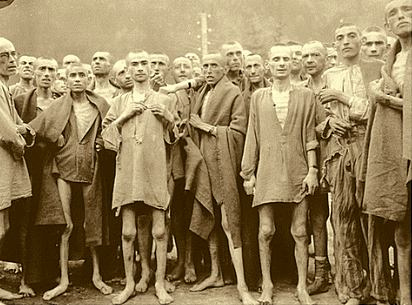 The more I researched the more I realised how extraordinary Peter van Pels was. He survived Auschwitz, a death march, and Mauthausen …. I felt it was crucial to tell his story to this new generation, and for them to know that he was a real person, not a made up one …. Although we can’t know if these exact things happened to Peter, they did happen to many others.
What surprised me in the writing of this book was how uplifting the research was at times …. There was so much laughter and love in the annexe, and there were equal tales of love and care in the camps, such as moments like Mrs. Frank digging beneath the walls of the sanatorium in Auschwitz to pass Anne food. Prisoners somehow managed to hold on to their humanity in the face of systematic degradation.
The people who survived the Holocaust are dying. We need to keep their knowledge and experience alive. We need to do it in their own words, through testimony and historical research, but if we are careful and respectful of the facts, we can also do it through story.
 Novel Novice
Leave a comment